

Practical SEND Support That Makes a Difference
Specialist support, structured interventions and practical resources for schools supporting neurodivergent learners.
NeuroKind London works alongside SENCOs, teachers and pastoral teams to provide practical, neurodiversity-affirming support that can be embedded into everyday school life.
From structured social communication interventions to observations, staff development and ready-to-use SEND resources, support is tailored around the needs of your learners and setting.
Qualified Teacher (QTS) • Neurodevelopmental Practitioner • 10+ Years SEND Experience • School-Based Practice
NeuroBuilders School Intervention
6- or 10-week structured intervention with baseline/outcome measurement.
School Observation & Consultation
Observation + recommendations + practical strategies.
Staff Training / CPD
Autism, ADHD, neuroaffirming practice, social communication, wellbeing.
SEND Resources
Ready-to-use interventions and teaching resources.
How NeuroKind Can Support Your School
NeuroBuilders™ School Intervention
Build communication. Confidence. Connection.
A structured LEGO®-based social communication intervention supporting learners to develop communication, collaboration, flexible thinking and confidence through purposeful group activities.
Schools can choose structured:
6-week Connect programme
or
10-week Thrive programme
Programmes can include:
Baseline assessment
Individual/group targets
Structured weekly sessions
Progress monitoring
Outcome measurement
End-of-programme summary/report
School Observation & Consultation
Understand what's happening — and what might help.
For learners experiencing barriers with communication, regulation, participation, relationships or accessing their learning.
Support can include:
In-school observation
Consultation with relevant staff
Identification of strengths and areas of need
Practical classroom strategies
Environmental recommendations
Visual and communication supports
Written recommendations
School observations are supportive and educational in nature and do not constitute a diagnostic assessment.
SEND Resources
Ready-to-use support for busy school teams.
Practical resources designed with real SEND classrooms in mind.
Lesson Bundles
Ready-to-teach SEND-friendly lessons and activities.
Intervention Packs
Structured resources for targeted individual and group support.
Pastoral & Wellbeing Tools
Resources supporting emotional literacy, regulation, reflection and relationships.
SEND Toolkits
Practical visuals, strategies and tools for everyday classroom use.
SEND Expertise Grounded in Real School Practice
NeuroKind London was founded by Halina Kaur Sekhon, a qualified teacher and Neurodevelopmental Practitioner with over 10 years' experience supporting neurodivergent children and young people.
Alongside specialist neurodevelopmental work, Halina has extensive experience working within SEND education and understands the realities schools face — limited time, competing demands, complex learner profiles and the need for strategies that are practical enough to use every day.
NeuroKind's approach combines professional knowledge with realistic, strengths-based support designed to work within real classrooms.
10+ Years SEND Experience| Qualified Teacher (QTS)| Neurodevelopmental Practitioner| Neurodiversity-Affirming Approach
Why Schools Work With NeuroKind
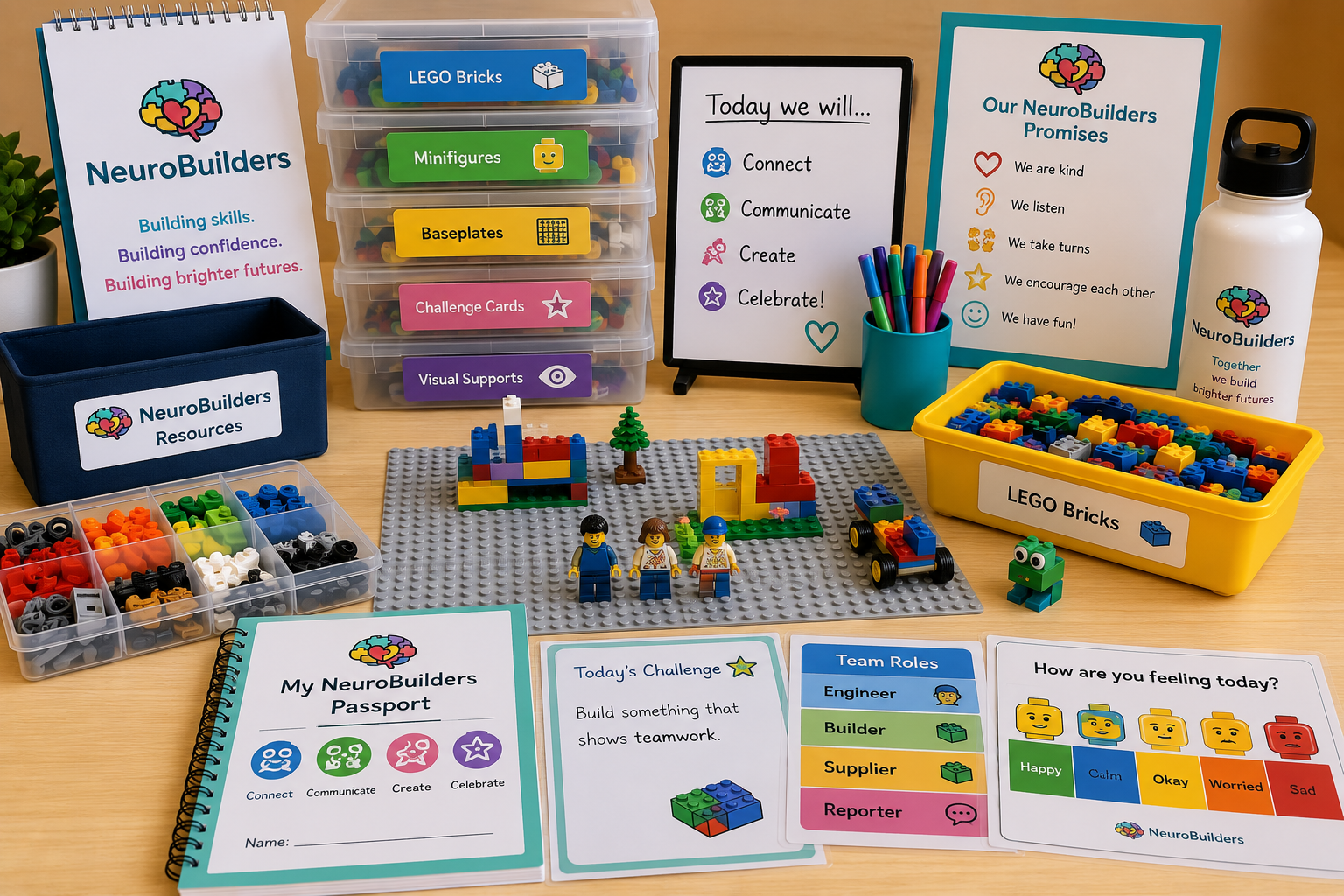
Bring NeuroBuilders™ Into Your School
A structured social communication programme where learners build more than LEGO® models — they build communication, collaboration, confidence and connection.
ASSESS
Baseline profile identifies strengths and areas for development.
→
PLAN
Meaningful targets guide the intervention.
→
BUILD
Structured collaborative sessions provide opportunities to practise skills.
→
MEASURE
Progress is reviewed and outcomes are captured.